


Original post here. Sourced via greatgrottu. Original text:
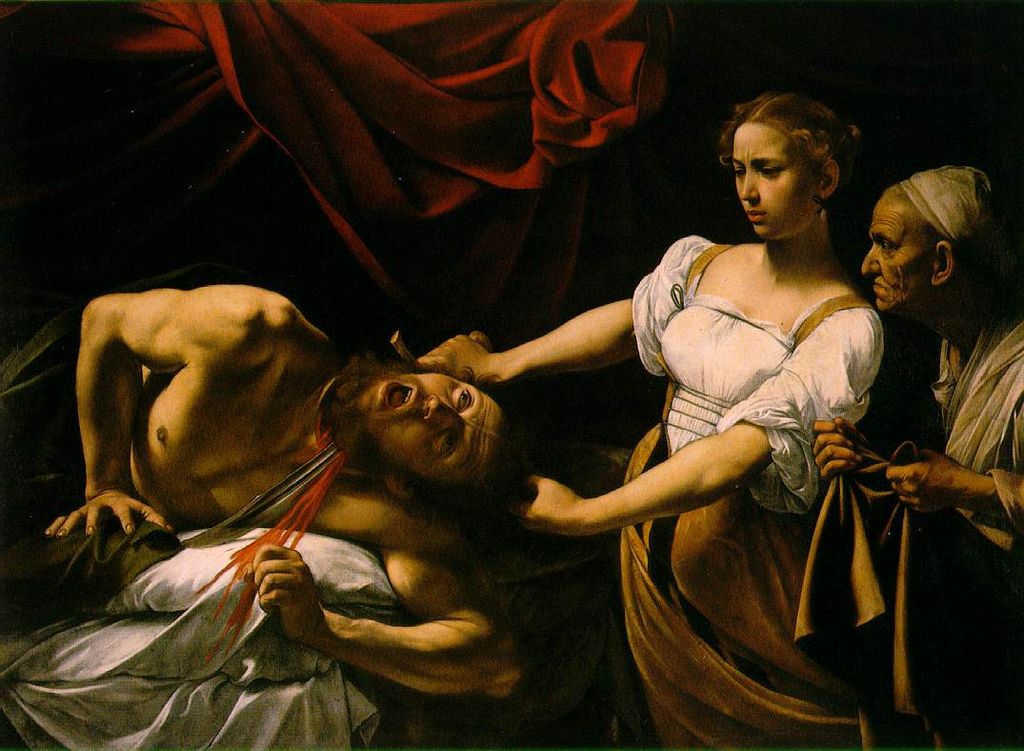
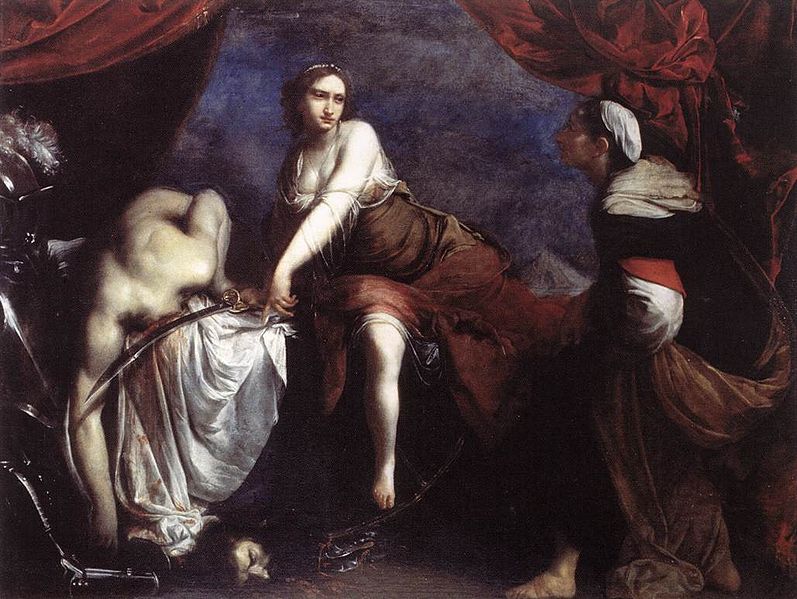
The story behind Judith and Holofernes comes from the deuterocanonical book of Judith. The Bible tells us that the King of Nineveh, Nebuchadnezzar, sent his general, Holofernes, to subdue his enemies, the Jews. The Jews are besieged in Bethulia and rapidly lose all hope of victory. Famine further undermines their courage and they begin considering surrender.
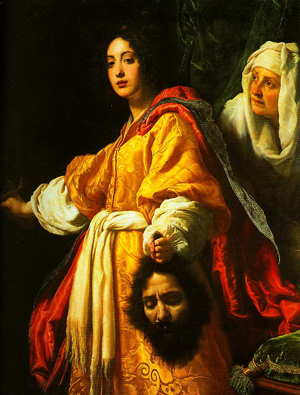
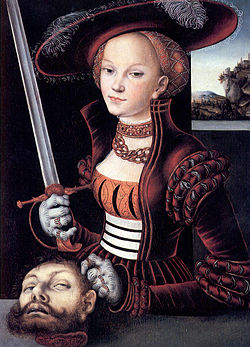
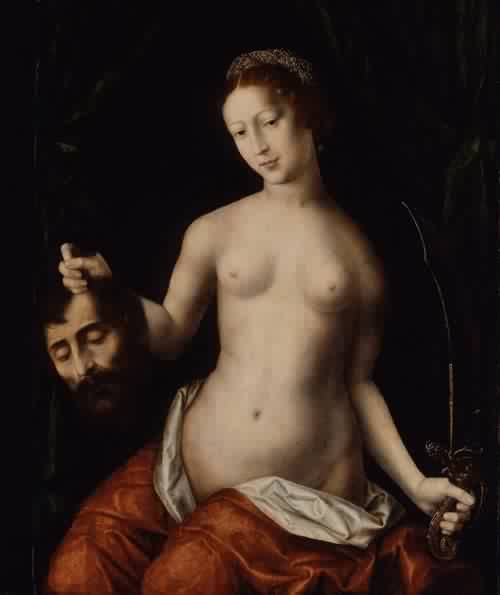
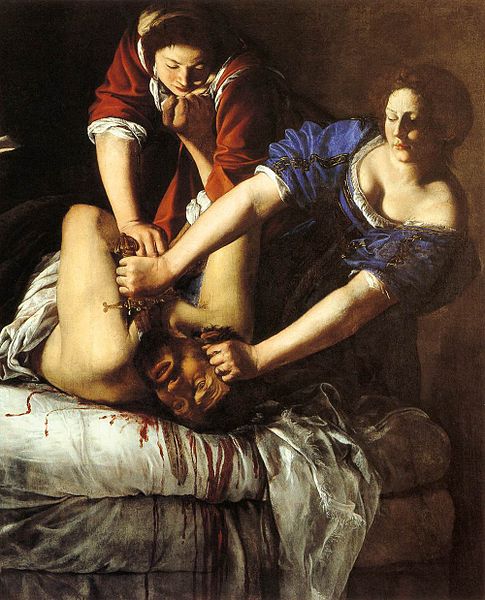
Judith, whose name means “lady Jew” or “Jewish woman”, was a strikingly beautiful widow. She overhears plans for surrender and decides to “deliver the city”. She creeps into the Assyrian camp, seduces Holofernes with her captivating beauty, waits until he is thoroughly drunk, and cuts off his head.
The account of the beheading of Holofernes by Judith is the subject of more than 114 paintings and sculptures.
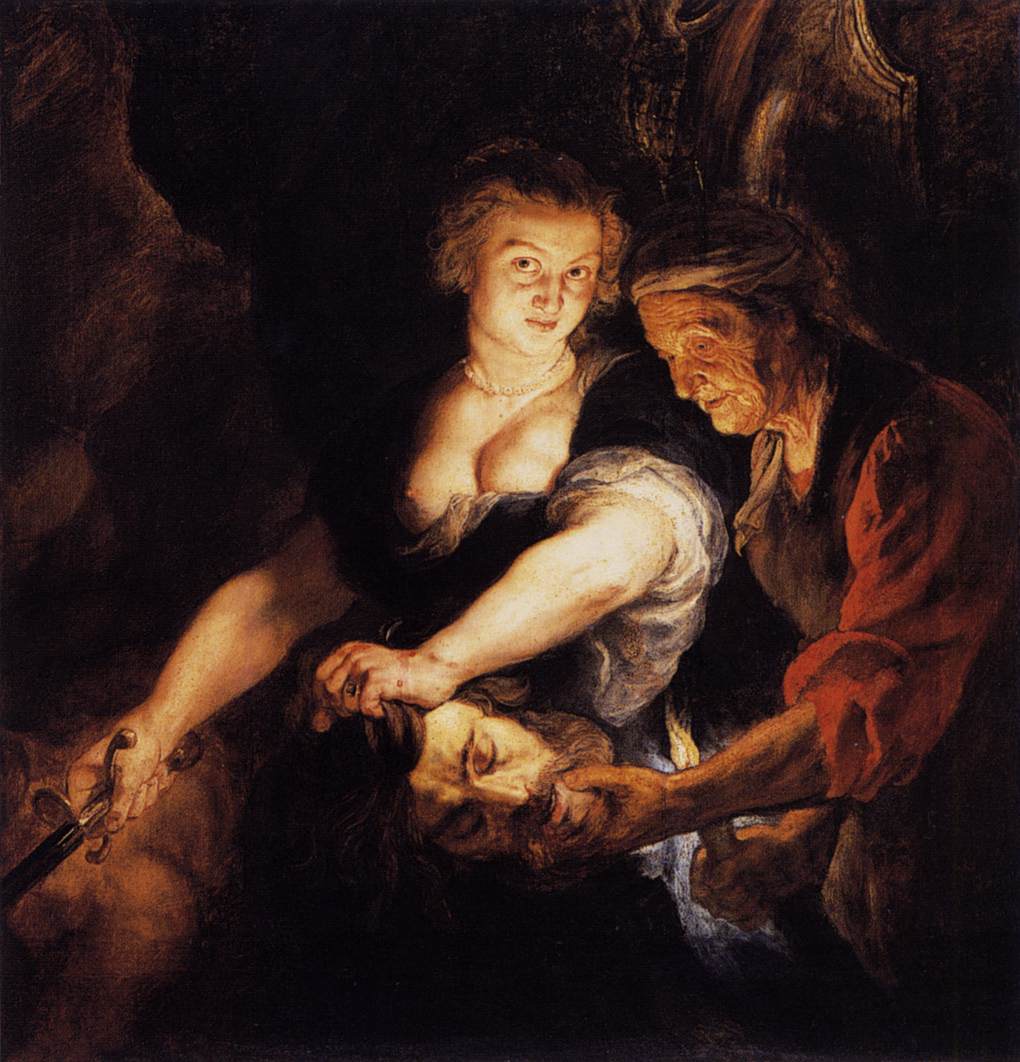
In European art, Judith is very often accompanied by her maid at her shoulder, which helps to distinguish her from Salome, who also carries her victim’s head on a silver charger (plate).
1.Judith beheading Holofernes by Caravaggio. c.1598-1599 (Galleria Nazionale d’arte Antica – Roma)
2.Judith slaying Holofernes by Artemisia Gentileschi. c.1614-1620 (Uffizi – Firenze)
3.Judith with the head of Holofernes by Cristofano Allori. 1613 (Royal collection)
4.Judith victorious over Holofernes by Lucas Cranach the Elder. 1530 (Castello di caccia di Grunewald)
5.Judith with the head of Holofernes by Jean Massys. 1543 (William A. Coolidge Galley)
6.Judith and Holofernes by Fransesco Furini. 1636 (Galleria Nazionale d’arte Antica)
7.Judith cutting off the head of Holofernes by Trophime Bigot. c.1640 (The Walters Art Museum)
8.Judith with the head of Holofernes by Peter Paul Rubens. 1616 (Herzog Ulrich Anton Museum)
9.Judith slaying Holofernes by Artemisia Gentileschi. 1611-1612 (Museo di Capodimonte – Napoli)
10.Judith with the head of Holofernes by Titian. c.1515 (Galleria Doria Pamphilj)